
Leads creation can be seen as just one aspect of the sales cycle, but that is not where the real work begins. It starts once the prospect enters your sales funnel, at which point you must gain insight into whether opportunities are moving forward and why they are not moving forward.
That's the reason why proper sales pipeline management is essential for any enterprise. In case each lead is followed properly, companies can notice issues before anything serious happens and resolve them quickly and effectively.
CRM can be used as a way to introduce some order into your sales efforts. With the help of CRM, you can monitor all leads and thus reduce the number of lost deals.
Why Deals Get Stuck in the Sales Pipeline
It is quite likely that many organizations miss out on prospective clients not due to their bad quality offerings but simply as a result of poor opportunity management practices.
Some of the main reasons why sales transactions can stall include:
Failure to make follow-ups
Slow reaction from the sales staff
Lack of deal ownership
Incomplete client information
Insufficient visibility of deal development
Unreliable sales process
Without proper insight into where the problem lies, managers have a hard time taking corrective actions.
The Cost of Limited Pipeline Visibility
In the absence of any form of a centralized database, sales information is dispersed in spreadsheets, emails, personal notes, and messaging systems.
This leads to:
Overlooking critical activities by sales personnel
Difficulties for management in tracking the progress of deals
Opportunities left dormant for prolonged durations
Unreliable revenue forecasting
These problems often culminate in extended sales cycles and poor conversion rates.
How CRM Brings Structure to Sales Pipeline Management
The CRM system becomes a centralized hub of information for each of the sales opportunities.
This eliminates the need for piecemeal information and instead enables sales personnel to use:
Information about customers
Communication history
Activity information
Value of the deal
Sales status
Next steps to be taken
This helps ensure that the sales process remains well organized.
Identify Stalled Deals Before They Are Lost
Among the many benefits offered by a sales pipeline management CRM solution is the possibility of spotting deals requiring urgent action.
For instance, CRM can help bring to the forefront those prospects which are:
Not updated lately
In need of some follow up
Stuck at the same point since long
Indicating signs of inactivity
With such information available, it enables sales teams to take appropriate action before the deal gets lost.
Teams would be able to act proactively rather than reactively.
Gain Stage-Wise Visibility into Every Opportunity
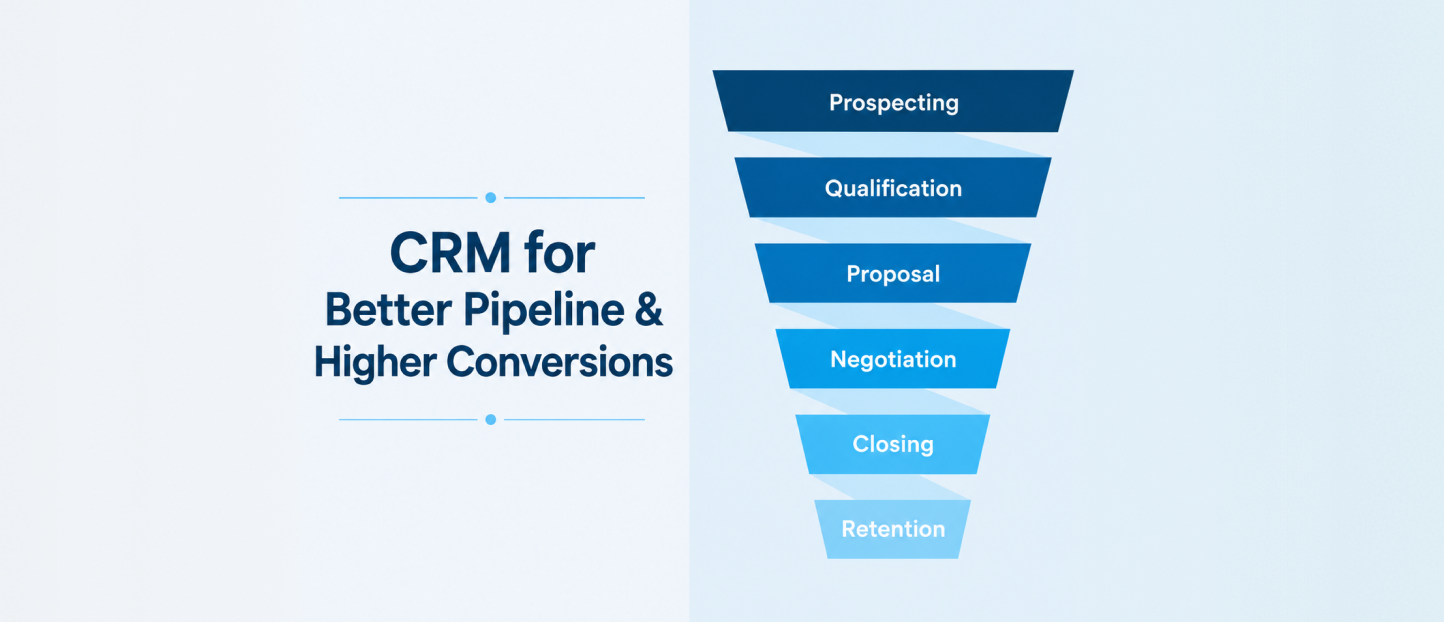
All deals pass through several stages before they become clients.
CRM sales Pipeline management enables you to know the stage at which an opportunity stands in the pipeline.
The typical stages include:
Lead Generation
Qualification of Leads
Discovery
Proposal
Negotiation
Closed Won
Closed Lost
Stage-based visibility enables managers to detect quickly where there is a drop in leads at various stages.
This helps in improving the sales process and increasing conversion.
Looking for better control over your sales pipeline?
The Workpex CRM enables businesses to monitor opportunities in real-time, locate bottlenecks and ensure that every deal gets its due share of attention.
Take Corrective Action in Real Time
The detection of a deal that is not progressing well is essential, but its effective implementation is what makes the difference.
CRM tools enable a sales team to address an issue efficiently by means of:
Reminders
Task allocation
Management notification
Activity alerting
Deal escalation
In case a deal takes too much time in the "proposal" phase, for example, a CRM tool will notify the respective sales person or the sales manager to act.
Reduce Missed Follow-Ups with Pipeline Automation
A good follow-up is one of the key elements of successful selling. Nevertheless, follow-up management manually is likely to result in lost opportunities and untimely reactions.
Pipeline automation CRM provides an opportunity for completing the necessary actions.
The following can be automated:
Follow up reminder
Appointment scheduling
Proposal alerts
Client checks
Creating tasks
Sales activity
This will enable the sales staff to concentrate on making sales and developing good relations with clients.
Improve Accountability with CRM Pipeline Tracking
The sales process becomes more effective if there is clear accountability for each and every lead. The CRM sales process allows managers to monitor:
Owner of each deal
Pending activities
Follow up
Flow of deals from one stage to another
Overall performance of the team
Accountability ensures that leads will be managed instead of being forgotten by someone in the team.
Align Sales Activities with Customer Intent
It’s not true that all leads are ready to buy immediately.
The sales funnel management CRM allows salespeople to adjust their strategy according to the stage of the buying cycle the lead is at.
For instance:
Prospects in early stages may require educational materials.
Prospects in mid-stages may require demos or consultation.
Prospects in late stages may be assessing offers and costs.
The provision of relevant information during various stages is essential for efficient passage through the pipeline and quick conversions.
Make Better Decisions with Data and Reporting
Good pipeline management requires information.
CRM allows for live reporting to help companies monitor:
Conversion rates
Duration of sales cycle
Value of pipeline
Progress of deals
Productivity of team
Revenue forecasting
All of which helps managers make better decisions based on the trends.
When looking for best CRM software in India, companies consider these reporting features essential because they offer critical insight into their sales figures.
Why CRM Is Essential for Sales Tracking
It then becomes increasingly difficult to know what works in advancing deal progression and what slows down their progression without having precise tracking in place.
CRM for sales tracking enables organizations to track all interactions, activities, and opportunities that occur during the sales cycle.
This brings predictability and measurability to the sales process while also ensuring that your team stays focused on what matters.
Conclusion
Effective sales pipeline management goes beyond merely keeping track of opportunities. Organizations require full transparency at all levels of their sales processes and should be able to find out which areas might create bottlenecks and act on them before losing deals.
CRM software helps manage opportunities by providing features that help companies track their pipeline performance and even optimize the same in real-time. With the help of deal management and automation, businesses can avoid losing opportunities along the way.
Ready to Improve Your Sales Pipeline Performance?
Workpex CRM enables companies to detect dead deals, automate follow-ups, keep track of opportunities, and get visibility into all sales pipeline processes using one system.
If you want to boost your conversions, lower your number of deal losses, or optimize your sales process, Workpex will give you everything you need to make it happen.
Book a demo today and discover how Workpex can transform your sales pipeline management strategy.