Many organizations today use software for managing their operations, customers, and growth. Choosing the right solution is essential to maintaining a productive organization. When considering the purchase of a new ERP system vs CRM, it’s important that you understand the benefits of both systems and determine how best to leverage your investment.
This guide will give insight about the similarities and differences between the two systems. In addition, we will help you determine which option is appropriate for your organization based on its specific business objectives when evaluating CRM vs ERP.
The Problem: Disconnected Systems and Inefficient Processes
Managing customer engagement and the various internal operations become much more challenging as commercial entities continue to grow.
Some common challenges that arise include:
Missed follow-up calls due to poor communication with customers
A lack of access to sales their performance
Disorganization for inventory / financial management
Data resides in multiple systems throughout other applications
While team members are not part of one central location, mistakes and opportunities will also be delayed because of this silo effect.
The Solution: Understanding ERP and CRM Software
Business enterprises generally utilize ERP and CRM software to enhance operational performance. While both tools enhance efficiencies in many areas, they are designed for different functions.
What is a CRM system?
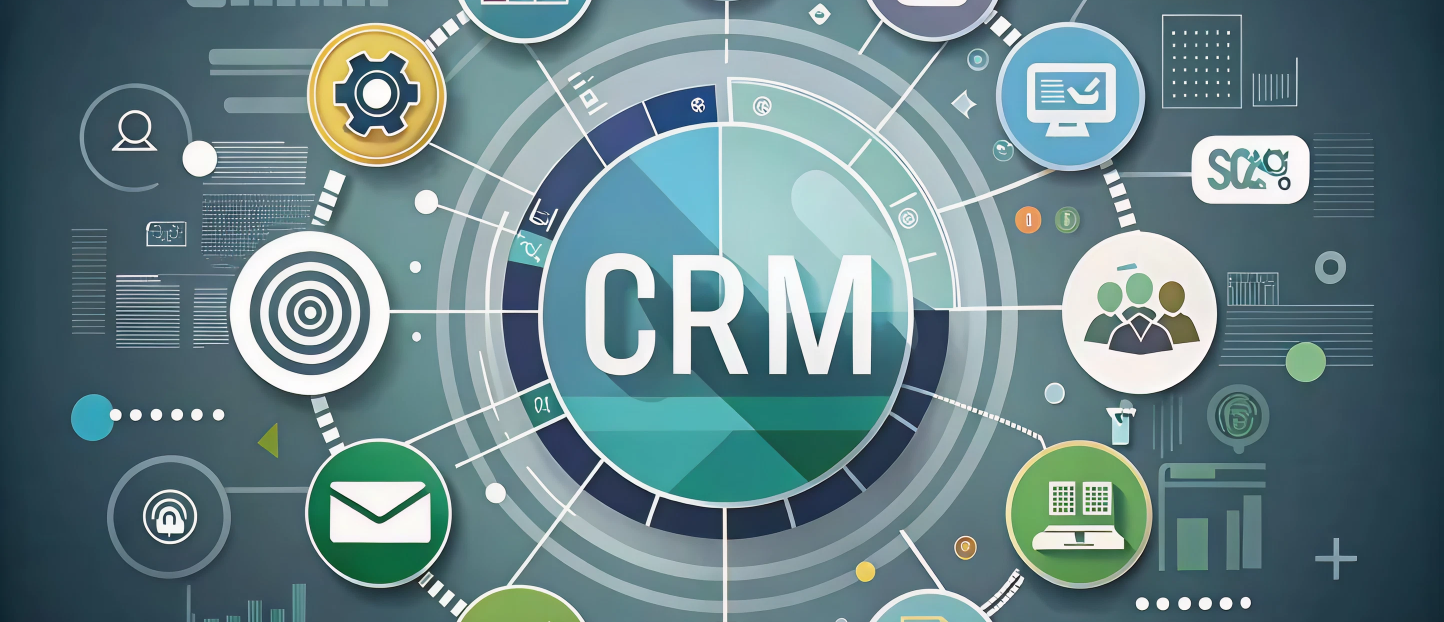
CRM systems are data-driven applications that facilitate the management of customer interactions and sales processes.
Commonly Found CRM Features and Functions:
Lead And Contact Management
Sales Pipeline Management
Follow-Up Communication History
Marketing Automation
Customer Support Management
Primary goal: Increase sales, improve customer relationships, and boost retention.
What is ERP?
An enterprise resource planning (ERP) application provides an organization with capabilities to integrate and manage key components of business operations across all functions of the organization.
Key components of ERP are:
Accounting and Financial Management
Inventory & Supply Chain Management
Procurement & Vendor Management
Human Resources & Payroll Management
Manufacturing & Production Planning
Key goal: Improve operational efficiency and provide a single source of information for all business processes.
CRM vs ERP: Key Differences
If makes sense that before a company can make a correct distinction between CRM vs ERP, it must first acknowledge their key differences. Without first clarifying these distinctions, a company will likely make an incorrect decision surrounding ERP vs CRM differences.
1. Focus Area
A CRM system focuses on activities surrounding customers – Sales, Marketing, and Support.
An ERP system focuses on managing a company's internal processes such as Financial Transactions, Inventory Management and Human Resources.
2. Primary Users
CRM Users include people working in Sales, Marketing and Customer Service.
ERP Users are primarily made up of people working in Finance, Operations and Human Resources.
3. Company Objective
The goal of a CRM system is to generate additional revenue through effective management of customers.
The goal of an ERP system is to control your company's costs while creating processes that are efficient in nature.
4. Managed Data
A CRM system will store information such as customer contact information, customer interaction history, and customer purchase history.
An ERP system will typically store financial data, inventory data, orders and employee records.
5. Implementation Complexity
A CRM takes less time to implement and tends to be much easier to adopt than an ERP.
An ERP takes more time and is far more complex to implement due to the necessity of integrating multiple departments or teams.
ERP System vs CRM: When to Choose CRM
sing a Customer Relationship Management (CRM) system is the best solution when your business has problems with its customer relationships while comparing ERP system vs CRM.
A company that needs to have:
More leads tracked and followed up on a regular basis
More visibility into sales
More customers converted to sales
All communications with customers centralized in one area
More organized sales processes
For example, a real estate company that receives 100s of inquiries every day finds it almost impossible to keep track of their leads and will miss many if they do not track them properly. Implementing a CRM would enable them to systematically track and assign and generate their own follow-up actions, which will improve their ability to convert leads into sales.
ERP System vs CRM: When to Choose ERP
If you experience operational inefficiencies in your company, an ERP system is a great solution when evaluating ERP systems vs. CRMs. If you have the following needs, then you should look into ERP:
Accurate Financial Reporting
Inventory/Supply Chain Management
Streamlined Procurement
Centralized Operational Data
Compliance and Audit Preparedness
Use Case - If a manufacturing company has problems with missing or mistaken inventory and delayed production, ERP could help them streamline their processes by automating stocking, purchasing, and production planning.
Do You Need Both ERP and CRM Software?
Many companies have seen improved results when implementing both systems in conjunction with one another using ERP and CRM software.
Situations where use of the systems in tandem is warranted:
Sales information in the CRM can feed into the ERP software to support billing and invoicing.
The orders for customers, which may be tracked through the CRM, will get fulfilled through the ERP system.
Financial data in the ERP can assist sales teams in developing their tactics.
Real World Example:
A retailer selling product online will utilize their CRM to manage customer interactions and promote their products when marketing, and use their ERP to manage inventory and process orders (as well as do their accounting). The integration of the two systems allows for a seamless transition between generating leads and fulfilling orders.
Benefits of Choosing the Right System
Deciding between a CRM vs ERP solution also has clear, measurable business consequences.
Benefits of CRM:
Higher sales conversion rates
Better retention of existing customers
More productive teams
Greater visibility into sales performance
Benefits of ERP:
Lower overall operational costs
Accurate financials
Better utilization of resources
More informed decisions using real-time data
Common Mistakes to Avoid
When organizations compare an ERP system vs CRM, they commonly make the following mistakes:
Opting for an ERP system instead of identifying poor sales tracking as the actual problem.
Implementing a CRM system without clearly defining a sales process.
Anticipating that one solution can address all of the organization's needs.
Ignoring the need to integrate with other existing systems.
Avoiding these types of mistakes can lead to more successful integrations and higher return on investment (ROI).
How to Decide: CRM vs ERP
Consider these three options below as a general guideline for selecting either ERP or CRM software to improve your business's performance:
If you are struggling to generate sales and/or leads and manage customers; then implement a CRM solution.
If you need better operations management, financial management or Inventory management; then implement an ERP solution.
If you have related issues with both areas; then integrate an ERP and a CRM solution.
Conclusion
It's essential to understand the differences between CRM vs ERP when it comes to choosing your technology. A CRM is designed to improve the management of customers to generate higher revenue. In contrast, an ERP improves operational efficiency through streamlining.
When selecting a solution, consider which of these two systems will assist you based on your business priorities. Selecting the appropriate system will help you become more productive, eliminate wasteful practices, and support long-term growth.
With Workpex, your sales team will have full visibility and control over your customers from the moment they contact you until they are repeat customers. To achieve true growth you must rely on structured processes and consistent execution- not multiple uncoordinated efforts.
Take the Next Step Toward Smarter Growth. Don’t let missed opportunities and disorganized processes hold you back. With Workpex CRM, you gain the visibility and control needed to convert more leads and build lasting customer relationships.